How to Protect Your
Yacht’s Gelcoat
While Docked
Most gelcoat damage doesn’t happen at sea. It happens in the marina.
A fresh gelcoat or hull paint job is one of the most satisfying things about owning a yacht. It’s also one of the most expensive things to redo — typically €300–500 per metre for a professional respray, and gelcoat repairs can run €100+ per spot.
The good news: almost all of it is preventable with the right gear and two minutes of attention before you leave the berth.
The typical cost of a professional gelcoat respray. A single repair spot runs €100 or more. A complete set of quality fender covers costs a fraction of one repair — and prevents dozens.
The Four Things That Damage Gelcoat at the Dock
Bare Fenders Rubbing Against the Hull
PVC fenders are hard. When a wake rolls through the marina or the wind picks up, fenders rub back and forth against your topsides. Over time, this leaves black scuff marks that are surprisingly difficult to remove — and if left long enough, they can wear into the gelcoat surface itself.
Use neoprene fender covers. The soft neoprene surface eliminates PVC-to-gelcoat contact entirely. Covers also keep the fender cleaner, which means less grit trapped between fender and hull. Shop Fender Covers →
Mooring Lines Chafing Across the Hull
Where your bow lines, stern lines, and spring lines pass over the rail, through the fairlead, or touch the hull edge — they create friction. Over weeks and months, this friction wears through gelcoat and eventually into the underlying fibreglass. It’s a slow process that’s easy to miss until the damage is done.
Use neoprene rope covers on any line that contacts the hull, rail, or fairlead. This protects both the gelcoat and the line itself from chafe damage. Shop Rope Covers →
Undersized or Poorly Positioned Fenders
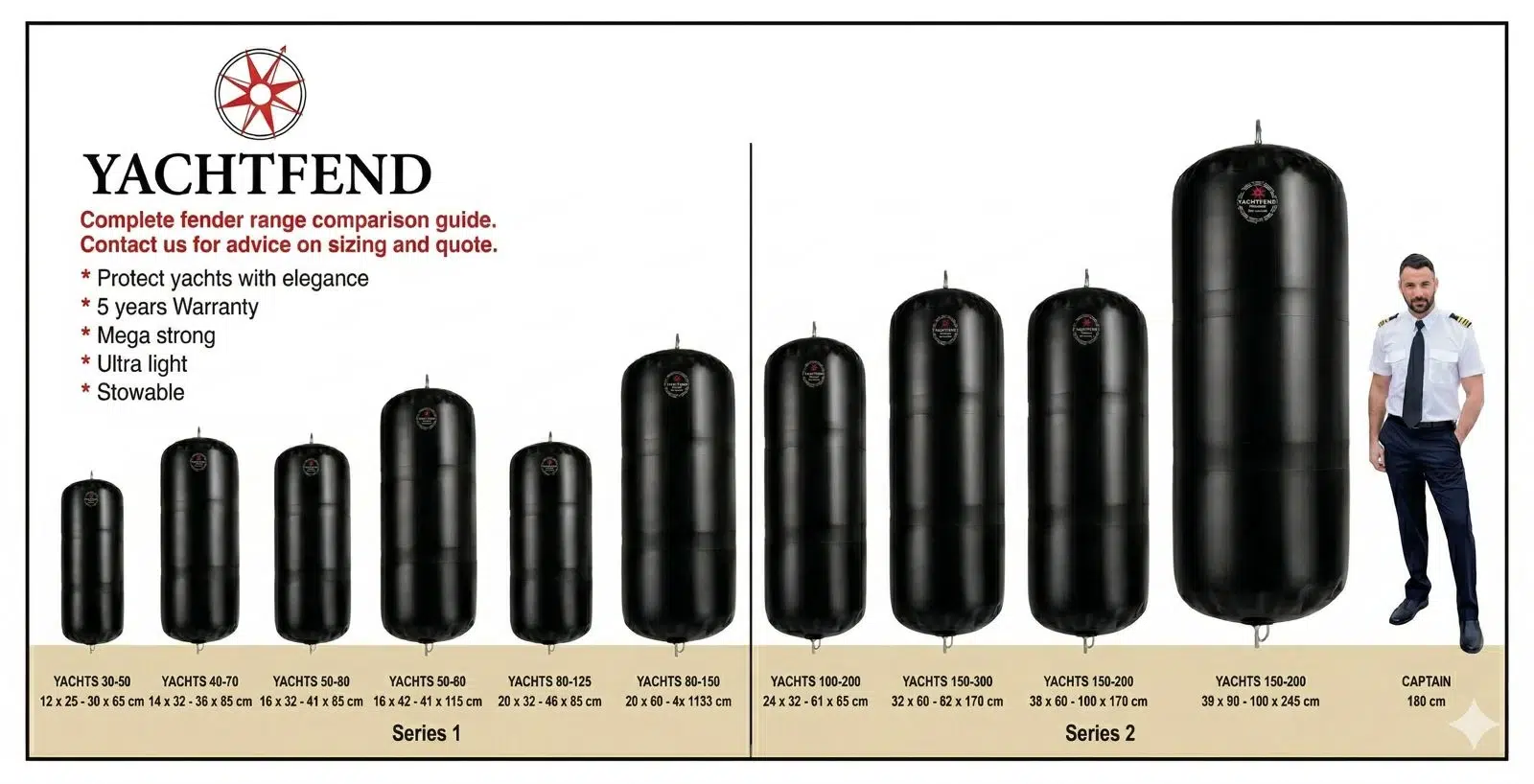
If your fenders are too small, they don’t create enough standoff between the hull and the dock. If they’re positioned too high or too low, part of your hull is completely unprotected. Both situations lead to direct hull-to-dock contact — the outcome fenders exist to prevent.
Size fenders correctly — one inch of diameter per 4–5 feet of yacht length — and check fender height regularly. Floating docks change height with the tide; fixed quays don’t move but your fenders can slip. Fender Size Guide →
UV Exposure
This isn’t a dock-contact issue, but it’s the biggest long-term threat to gelcoat. Constant sun exposure oxidises the surface, turning it chalky and dull. It’s especially severe on dark-coloured hulls, and the degradation is cumulative — it accelerates with each season of neglect.
If your yacht sits in a marina year-round, apply a UV-protective wax or ceramic coating annually, and consider covers for high-exposure areas. This is outside our product range, but it’s part of the complete gelcoat protection picture.
Causes 1, 2, and 3 are all solved by products that cost far less than a single professional gelcoat repair. Neoprene fender covers, rope covers, and correctly sized fenders are the complete answer for dock-related hull damage.
A Simple Docking Checklist
Before you leave your yacht in the berth, run through these five checks. It takes two minutes and can save thousands in hull repairs.
Pre-Departure Berth Check
- Are fenders correctly sized and positioned? Bottom of fender just above the waterline, covering the full contact zone.
- Are all fenders covered with neoprene covers? No bare PVC touching the hull.
- Are mooring lines protected with rope covers at every chafe point — fairleads, chocks, rail edges?
- Are lines properly tensioned — not so tight they load hardware, not so loose the yacht swings and fenders lose contact?
- Is there enough fender coverage for both calm conditions and moderate wind or wake from passing traffic?
One good set of properly sized fenders with neoprene covers costs less than a single professional gelcoat repair. Rope covers cost less than a single chafe-damaged mooring line. The maths on this is simple — the only question is whether you act before or after the damage happens.
Shop Gelcoat Protection
Neoprene fender covers, rope covers, and correctly sized fenders. Everything on this list, from Yachtfend.